The 4 Best Plastic-Free Dish Brushes of 2026: No Microplastics in Your Sink
Ditch slimy yellow-and-green polyurethane sponges that shed microplastics down the sink. We tested the best compostable wooden dish brushes and natural plant fiber scrubbers.
D
Dr. Elena VanceEnvironmental Health Researcher & Zero-Waste Advocate
2026-03-058 min read
Affiliate & Editorial Transparency
I Avoid Plastic is reader-supported. When you purchase products through our links, we may earn an affiliate commission at zero additional cost to you. We independently research, curate, and verify every item to ensure it meets strict zero-plastic and low-waste standards. Read our complete affiliate disclosure.
Quick Comparison
Our top vetted plastic-free recommendations at a glance
The familiar yellow-and-green dish sponge sitting by your sink is one of the dirtiest objects in your home. Microbiological studies from the University of Furtwangen found that a typical kitchen sponge hosts over 54 billion bacterial cells per cubic centimeter—a density rivaling human stool samples.
Furthermore, synthetic sponges are composed of:
Polyurethane Foam: Derived from petroleum hydrocarbons.
Polyester Scouring Backing: Fused with synthetic resins and chemical dyes.
Triclosan: Antimicrobial pesticide additives that degrade into toxic dioxins.
Every time you scrub a skillet, microscopic plastic particles break off and flow down your drain, contaminating rivers and marine life with non-biodegradable synthetic fibers.
The Natural Botanical Alternatives
Zero-waste kitchen brushes harness tough, water-loving plant fibers that humans used for centuries before plastic was invented:
1. Tampico Fiber (Agave Lechuguilla)
Harvested sustainably from the desert agave plants of Mexico. The fibers are stiff, elastic, and uniquely absorb moisture, swelling slightly to create superior lather retention. They are heat-resistant up to 280°F, meaning you can scrub boiling-hot cast iron safely.
2. Coconut Coir
Extracted from the fibrous husk surrounding coconuts. Coir is naturally water-repellent, highly abrasive against baked grease, yet soft enough not to gouge ceramic coatings.
3. Untreated Hardwood (FSC Beechwood)
Dense German beechwood provides natural rigidity and antibacterial tannins. When oiled lightly with organic linseed, it resists water absorption and lasts for decades.
Detailed Product Reviews & Analysis
Every product below was evaluated for chemical safety, build quality, and true plastic elimination based on verifiable manufacturer data and material analysis.
Materials:Untreated FSC German BeechwoodTampico Agave Cactus Fiber BristlesStainless Steel Wire Head Clip
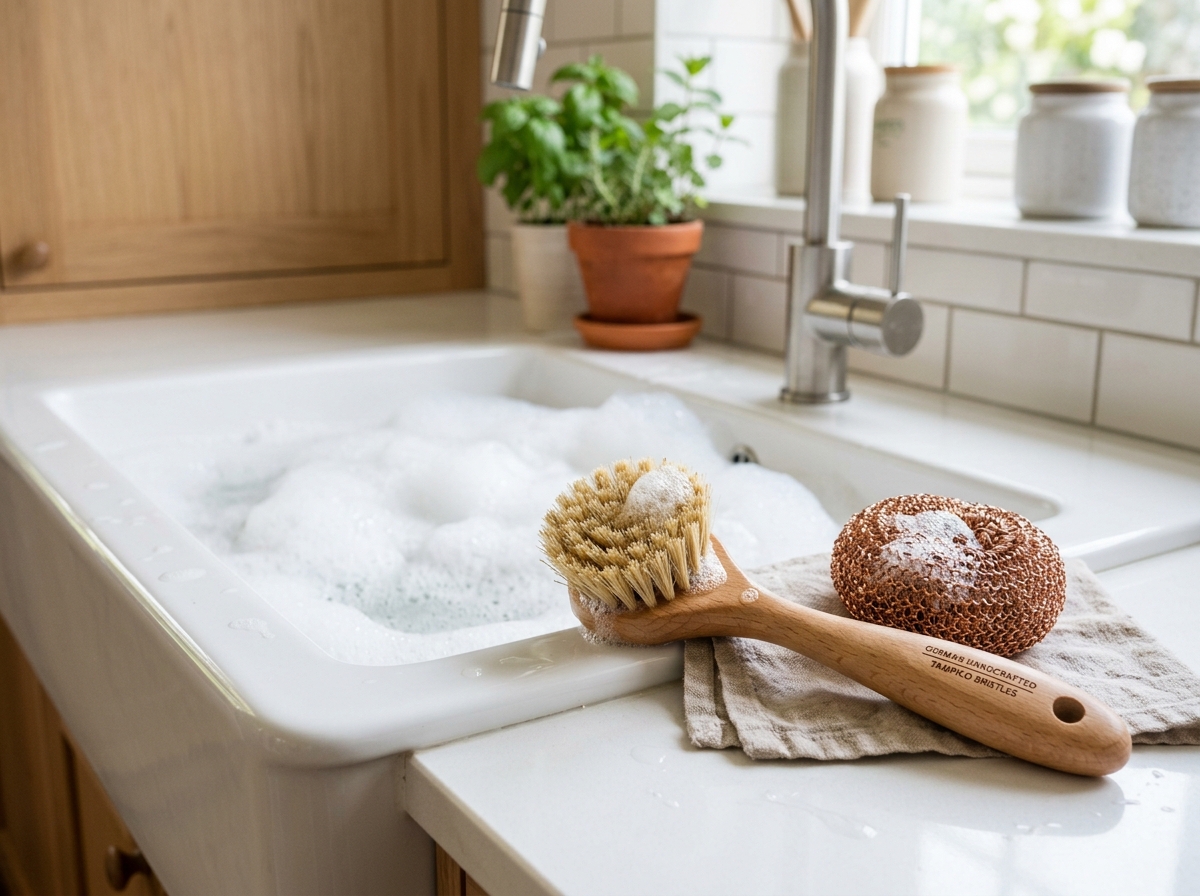
Handcrafted in Germany by Bürstenhaus Redecker (brush makers since 1935), this dish brush is the benchmark for zero-waste kitchen cleaning. The dense bristles are made from Tampico—a natural fiber obtained from the agave cactus leaf. Tampico bristles retain hot soapy water beautifully, resist boiling temperatures, and scrub stuck food without scratching non-stick or ceramic cookware.
Materials:Fine Woven Copper Threads100% Recyclable Scrap Metal
Instead of green synthetic scotch-brite plastic scrubbers that shed abrasive plastic dust down your pipes, woven copper is nature's ultimate heavy-duty scrubber. Because copper is a soft metal, it safely removes baked-on grease, burnt starch, and scorch marks from stainless steel pots, enameled Dutch ovens (like Le Creuset), sinks, and glass baking dishes without scratching.
Materials:Organic Coconut Husk Fiber (Coir)Natural Rubber Tree Latex Binder
Safix scrub pads are made entirely from discarded coconut husks bonded with non-toxic natural tree latex. They provide the perfect flex and scrubbing power to replace conventional yellow-and-green plastic sponges. Unlike plastic sponges that turn into stinky bacterial bio-hazards within 4 days, coconut coir stays fresh, rinses clean, and dries rapidly.
Getting inside narrow water bottles, wine glasses, and baby bottles usually requires cheap plastic wands that bend and snap. EcoCoconut uses dense, curved coconut fiber wire-wound to an FSC-certified plantation timber handle. It reaches into tight vessel corners with ease and naturally resists grease buildup.
Common questions and answers regarding materials, care, and plastic-free standards.
Yes. Standard kitchen sponges (polyurethane foam and green polyester scour pads) physically abrade during dishwashing. A 2024 study in Environmental Science & Technology calculated that rubbing a plastic sponge against dishware sheds tens of thousands of microplastic fibers per wash session, which flow straight down the sink drain and bypass wastewater treatment filters directly into ocean ecosystems.
The Verdict
Our Final Recommendation
Replacing plastic sponges with wooden brushes and coconut pads is one of the most visible and rewarding zero-waste kitchen upgrades: your sink looks like a Scandinavian kitchen and you eliminate synthetic plastic odors.
Top Overall Pick
Redecker Beechwood Dish Brush with Replaceable Head
Heritage German build quality, backyard compostable Tampico bristles, and a lifetime wooden handle with inexpensive refills.
Pro Shopping Tip: Keep a Redecker woven copper cloth next to your wooden brush for scorched cookware—it cuts burnt cheese and starch faster than steel wool without scratching.
Ditch toxic plastic bento boxes with cracking latches. We tested the best stainless steel and bamboo lunch boxes for kids, office commuters, and meal prep.
Stop reheating leftovers in toxic plastic tupperware. We tested the best plastic-free glass, stainless steel, and platinum silicone food storage containers.
Give gifts that don't end up in a landfill. We curated the best plastic-free, non-toxic gift ideas that combine premium aesthetics with sustainable craftsmanship.