What to Use Instead of Plastic Food Storage Containers (Tupperware)
Switch to borosilicate glass food containers with glass or silicone-sealed lids for home, or 18/8 stainless steel containers for commuting.
The Avoid Plastic Score: 8.6/10
Independent rating on swap utility & durability
The Verdict: Immediate health and usability upgrade. Food tastes better and containers never stain.
Why We Recommend Borosilicate Glass Storage Containers
Never stains, never absorbs odors, can go straight into an oven or microwave, and lasts indefinitely.
Pros and Cons of Making the Switch
✓What's Great
- 100% non-porous: completely immune to tomato and turmeric stains
- Oven-safe up to 450°F and microwave-safe
- Clear walls make refrigerator inventory visible at a glance
✕What Sucks / Annoyances
- Heavier than plastic when carrying in a commuter backpack
- Can chip or crack if dropped on hard tile flooring
People who need lightweight, shatterproof lunch containers for vigorous outdoor work (choose stainless steel instead).
Do not throw away used pasta sauce, pickle, or condiment jars. Wash them thoroughly and use them for soup, grains, and leftovers.
Budget Alternative: Repurposed Glass Food Jars or Basic Tempered Glass ($0 to $25) — Saved glass jars cost $0. A basic 10-piece tempered glass set from Anchor Hocking costs around $25–$30.
Recommended Products for This Swap
Researched recommendations based on durability, material purity, and real customer feedback.
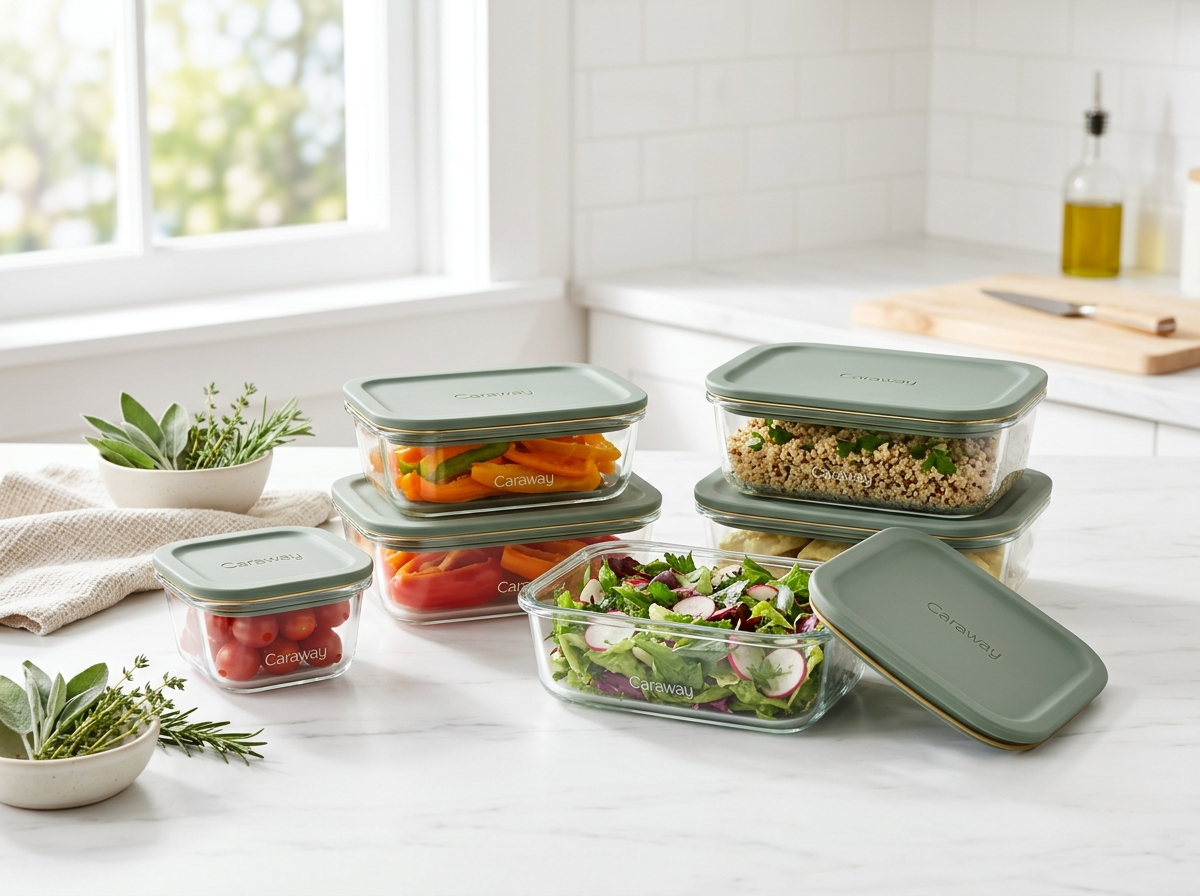
Caraway Non-Toxic Glass Food Storage Set
Why it made our list: Clean glass-and-ceramic lids with silicone pull-tabs; zero plastic snaps.
Anchor Hocking Tempered Glass Set
Why it made our list: Made in USA tempered soda-lime glass with durable mineral-treated covers.
Want our comprehensive comparison of all options?
Read our detailed guide, material breakdown, and multi-product reviews.
Practical Switching Tips
- 1.Let frozen glass containers sit on the counter for 10 minutes before placing in a hot oven to avoid thermal shock.
- 2.Write dates and contents on glass lids using a washable grease pencil.
Frequently Asked Questions About Plastic Food Storage Containers (Tupperware)
Common questions and answers regarding materials, care, and plastic-free standards.
Research indicates that microwaving plastic containers accelerates the breakdown of polymer bonds, releasing microplastics and plasticizer chemicals into fatty or acidic foods.